
Pressing the Flesh
What a handshake used to say—and why I miss it more than I expected

There’s something we lost when we stopped shaking hands. And teaching our kids about it.
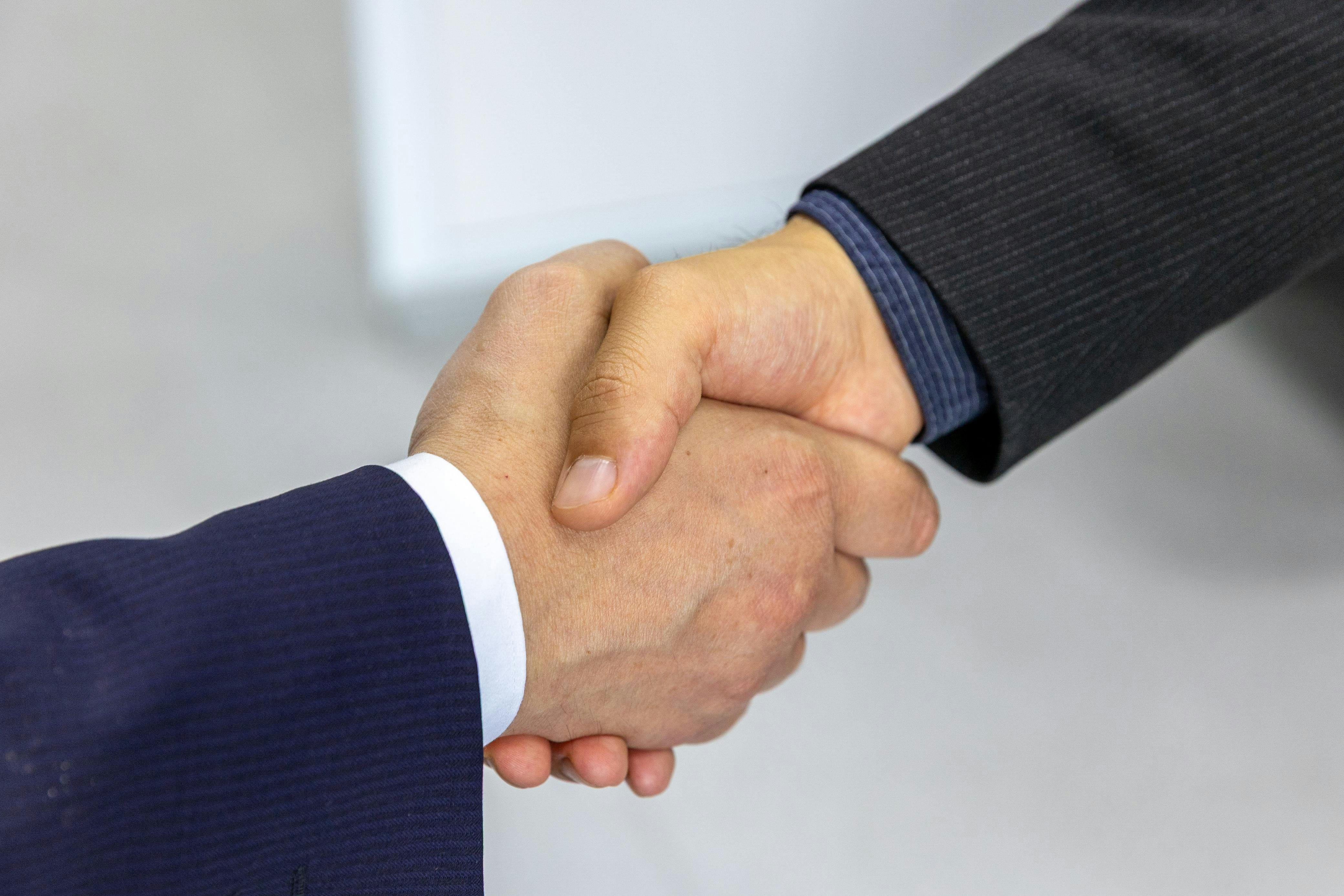
I remember the first time I shook hands with one of my dad’s friends.
His grip was firm. Mine tried to be.
It felt like a transaction. Even as a kid, I knew it mattered—though I couldn’t have said why.
Over the years, I’ve probably had hundreds of handshakes I barely noticed. Firm. Limp. Damp. Usually I didn’t notice. Sometimes I did.
That’s the way with things that are everywhere—you only see them when they’re gone.
And now they’re mostly gone.
We went through phases.
The high five—Down low… too slow… slap it back, Jack.
There was choreography to it. Rhythm. A shared joke.
Then came that strange era of personalized greetings—finger taps, shoulder bumps, little improvised dances. Oddly satisfying if you found someone who knew the same sequence. Like discovering you spoke the same tiny dialect.
Then fist bumps.
Fist bump?
What exactly are you learning from a fist bump?
Has anyone ever debated the proper firmness of a fist bump? The duration? The angle?
A handshake told you things.
Not everything—but something.
There’s wiring behind it.
When two people shake hands, the brain is taking in pressure, temperature, timing—making judgments before a word is spoken.
A small bump in oxytocin, maybe. Just enough to nudge things toward connection.
For men especially, it was a small, contained contest.
Who squeezes first. Who holds a beat too long. Who yields.
You still see it play out on TV. Donald Trump has turned it into theater—those prolonged, slightly aggressive grips where the other person looks like they’re trying to escape. Watch him with Emmanuel Macron and you can practically see the negotiation happening through their hands.
But I don’t think we’re teaching it anymore.
Sit in a restaurant bar and watch people meet. There’s a lot of waving. Some nodding. Occasionally a half-hug that no one commits to.
But not many handshakes.
I understand the appeal of the wave.
It has advantages.
You can do it through glass.
Across a highway. Two palms pressed to opposite windows—usually initiated by someone’s seven-year-old for reasons no one fully understands.
And there are… other waves you can see through glass.
Those tend to involve fewer fingers.
The wave, it turns out, has range. A wave says “I see you.”
But even with those advantages—and even after everything we went through with COVID—I still find myself missing the handshake.
I’m a press-the-flesh guy.
The handshake says “now I know you.”
And one of these days, my grandson and granddaughter are going to learn it. Maybe from me.
Not perfectly at first. A little too soft, maybe. Or too quick.
But they’ll learn.
Because there’s something in that brief moment—skin, pressure, eye contact—that says more than a wave ever will.